原标题:“梅花”逼近,宁波已转移十万余人,多县市山洪灾害红色预警宁波市政府防汛防台抗旱指挥部9月13日发布通知,据防汛防台抗旱应急预案,决定于13日17时提升防台风应急响应至Ⅰ级。

B |
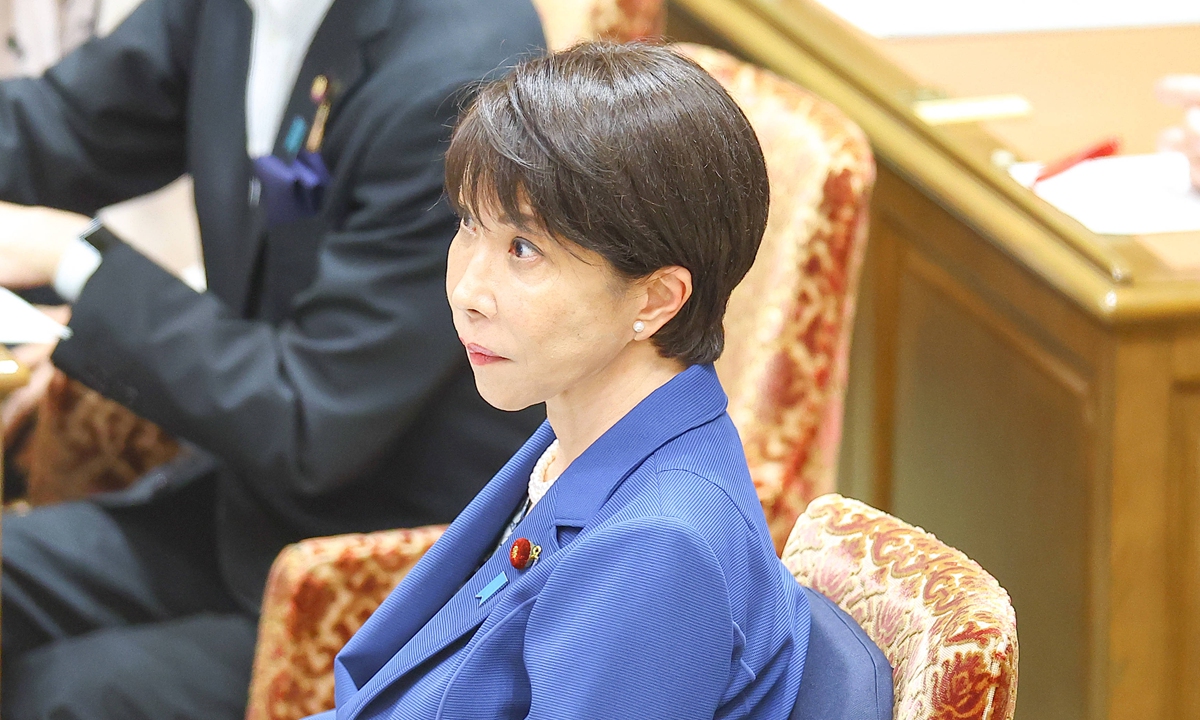
Japanese Prime Minister Sanae Takaichi attended the party leaders debate held at the House of Representatives in the Diet,. Tokyo Japan on July 15, 2026.
Due to concerns about fueling tension with China and South Korea, Japanese Prime Minister Sanae Takaichi is considering refraining from visiting the notorious Yasukuni Shrine, a symbol of Japanese militarism and wartime aggression, to mark the anniversary of Japan's unconditional surrender in World War II (WWII) on Saturday, Japanese media outlet Kyodo quoted sources familiar with the matter as saying on Wednesday.
Chinese experts said even if Takaichi forgoes a visit to the notorious shrine, the potential decision is merely driven by political calculations and diplomatic maneuvering, and could not be interpreted as a shift in her right-wing stance or as a sign of remorse over Japan's wartime aggression.
Such a visit to the shrine by Takaichi, a conservative known for her hawkish foreign policies, would certainly fuel tensions with China and create a rift in relations with South Korea, two countries that suffered under Japan's wartime military atrocities, Kyodo News reported.
Takaichi regularly visited the shrine before, even while serving as a Cabinet minister. But she has not visited the shrine since becoming leader of the ruling Liberal Democratic Party and prime minister in October, according to Kyodo news.
Chief Cabinet Secretary Minoru Kihara said at a press conference on August 7, when asked about a possible visit by Takaichi to the shrine around the anniversary, that "it is a matter for the prime minister to decide appropriately on her own," according to Japan's Jiji Press.
A source close to Takaichi told the Jiji that, "I don't think the prime minister will visit Yasukuni Shrine. It would complicate relations with South Korea."
Japan's Asahi TV reported that Takaichi may forgo the visit because she believes it is necessary to avoid triggering diplomatic tensions with South Korea, as well as with China.
A visit to the notorious shrine by a sitting Japanese prime minister would be a serious political incident, as it would reflect the leader's attitude toward Japan's wartime aggression and broader historical issues. Even if Takaichi chooses not to visit the shrine, it would not signal a retreat from her right-wing stance or a change in her views of Japan's wartime aggression against other countries, Lü Chao, an expert on Korean Peninsula issues at the Liaoning Academy of Social Sciences, told the Global Times. Rather, he said, the decision would largely reflect political calculations and diplomatic maneuvering.
Lü added that Takaichi could still make other symbolic gestures on the anniversary to cater to Japan's right-wing forces, whose support helped propel her to power. Such a move, he said, would underscore that her views of Japan's wartime history remain unchanged and serve as a reminder to neighboring Asian countries to remain vigilant about Japan's political direction.
Reporting on Takaichi's possible decision to forgo a visit to the shrine, South Korean newspaper Chosun Ilbo said on Wednesday that Takaichi had regularly visited the Yasukuni Shrine. "In the Liberal Democratic Party leadership election held in October last year, Takaichi also said that if appointed prime minister, she would visit the Yasukuni Shrine, noting that such visits should not become a diplomatic issue." However, since then, Takaichi has not visited in person and has only dedicated offerings in a private capacity, per the report.
In April, after Takaichi sent a ritual offering to the notorious Yasukuni Shrine, Chinese foreign ministry spokesperson Guo Jiakun said that China firmly opposes and strongly condemns Japan's latest negative moves related to Yasukuni Shrine and has lodged strong representations and protests with the Japanese side.
The Yasukuni Shrine is a spiritual tool and symbol of Japanese militarists responsible for the war of aggression. It is in fact a shrine for war criminals, noted Guo.
No sitting prime minister has gone to Yasukuni since Japan's late leader Shinzo Abe did so in 2013, drawing strong criticism from neighboring Asian countries.
Beyond Takaichi herself, some Japanese politicians and lawmakers have kept visiting the Yasukuni Shrine, triggering fierce pushback from peace advocates in Japan and the international community, Liu Jiangyong, a professor at the Institute of International Studies of Tsinghua University, told the Global Times, noting that such visits not only reflect the long-standing right-wing stance of Takaichi and other conservative politicians on historical issues, but also lay bare Japan's enduring militarist remnants.
Also in April, members of the conservative solidarity association, a group of conservatives in Japan's Liberal Democratic Party, and 166 Sanseito lawmakers from the Diet and local assemblies visited the Yasukuni war shrine.
In response, Lin Jian, Chinese foreign ministry spokesperson said that China strongly deplores and condemns such acts.
"By visiting the Yasukuni war shrine that honors Japanese Class-A war criminals year after year, these Japanese politicians seek to reverse the just verdict on Japanese aggression, and hereby whitewash Japan's war crimes and revive militarism. The Chinese people and people elsewhere who suffered under Japanese aggression will never accept that, neither will anyone in the world who stand for peace. As Japanese neo-militarism keeps gaining strength, the international community must stay on high alert and stand ready to stamp it out before it could wreak havoc in the region," said Lin.
。

C | 2022年9月13日,浙江宁波,台风“梅花”来临之前的城市上空乌云密布。视觉中国 图13日16时,今年第12号台风“梅花”(强台风级)的中心位于宁波东南方向460公里处,中心最大风力42米/秒(14级) ,预计将以每小时10公里左右的速度向北偏西方向移动,强度维持或略有加强,逐渐向浙江中北部沿海靠近,最大可能14日下午到夜里在三门到舟山一带沿海登陆(台风级或强台风级,38~45 米/秒,13~14 级)。

D | 至13日10时,宁波市渔船3981艘(含休闲渔船145艘)全部到港避风。14日下午,宁波往返余姚、绍兴的城际列车部分车次暂停运营;13日至15日,铁路宁波站部分列车停运。14日全市各中小学、幼儿园、校外培训机构停课1天。至13日13时,全市已转移100759人,其中建筑工地93109人、海上养殖1110人,地质灾害、小流域山洪、危房、农家乐等相关人员6540人。

E | 13日中午,宁波市水利局、气象局发布山洪灾害红色预警,预计13日12时-14日12时余姚市、奉化区、宁海县、慈溪市、江北区、海曙区、象山县山洪灾害预警等级红色,发生山洪灾害可能性很大(Ⅰ级),北仑区、鄞州区、镇海区山洪灾害预警等级橙色,可能性大(Ⅱ级),须做好监测预警、转移避险等工作。返回搜狐,查看更多责任编辑:


