
花木兰传奇African delegates give thumbs up to China’s efforts to narrow the digital divide at media forum_我的网站
A | 엔비디아의 AI 칩 시스템 '베라 루빈 NVL72' 탑재美 루이지애나주에 1000억달러 들여 우주기지 구축 우주 기업 스페이스X와 전기차 회사 테슬라를 이끄는 일론 머스크의 X(옛 트위터) 캡쳐. 사진=일론 머스크의 X 계정 캡쳐일론 머스크 스페이스X 최고경영자(CEO)가 엔비디아의 인공지능(AI) 칩 시스템을 탑재한 위성을 내년 4분기에 첫 발사할 예정이라고 25일(현지시간) 밝혔다. 머스크는 이 날 X(옛 트위터) 계정에 “스페이스X는 엔비디아와 함께 우주에 최적화된 ‘베라 루빈 NVL72’를 설계했다”고 전했다. 또 “2028년엔 발사 규모가 상당히 커질 것”이라고 덧붙였다. 엔비디아도 자사의 X 계정을 통해 “‘스타마인드 AI 위성’ 1세대에 걸맞은 베라 루빈 NVL72 시스템이 적용될 계획”이라고 발표했다. 스페이스X는 이 날 미국 루이지애나주 남부 피칸아일랜드 습지에 1000억달러를 들여 차세대 우주발사 기지 ‘스타베이스 루이지애나’를 조성할 예정이라고도 발표했다. 이 기지에 ‘스타십’ 발사대 10기와 심해 운송시설, 우주선 처리시설 등을 세운다. 내년부터 공사 시작 후 2029년 완공을 목표로 한다. 머스크는 X 계정에 “하루 30회 이상의 스타십 비행이 가능한 거대 기지가 될 것”이라고 밝혔다. 이 소식에 스페이스X 주가는 이 날 나스닥 정규장에서 2.19% 오른 137.95달러에 마감했다. 시장에선 AI 위성 발사와 스타베이스 루이지애나 구축이 우주기업으로서 스페이스X의 새로운 발판이 될지 여부에 주목하고 있다고 블룸버그통신은 전했다.。 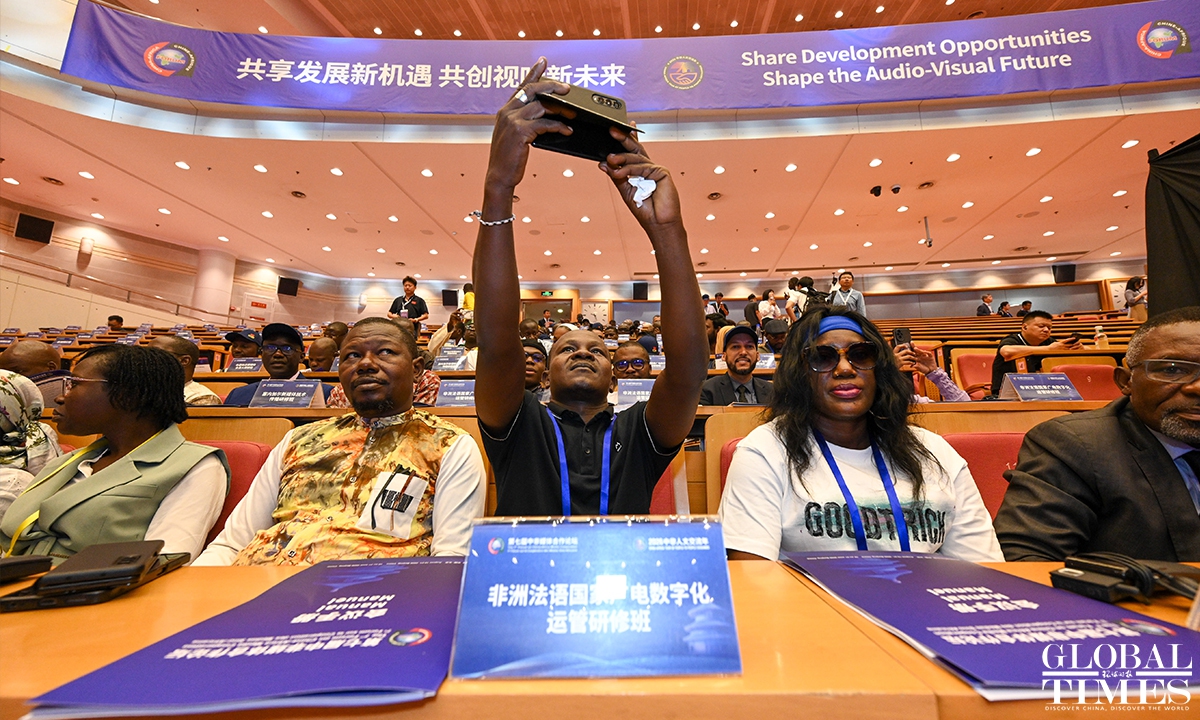 Clapping to the beat and humming the famous Chinese folk song "Jasmine Flower," one of the African delegates at the 7th China-Africa Media Cooperation Forum joined Unitree robots in an impromptu joint rendition of the classic Chinese melody, with the robots playing guitar and drums, in Beijing on Thursday. The lively scene was observed as the 7th China-Africa Media Cooperation Forum officially opened in Beijing on Thursday, with the attendance of 33 minister-level delegates from African countries, marking a record-high level of participation. Participants also released the Joint Declaration of the 7th China-Africa Media Cooperation Forum. Chinese and African guests held in-depth dialogues on a range of topics, including tech-empowered creative content, trade of audio-visual services, and the application of AI in radio, television and audio-visual sectors. Gregoire Ndjaka, director general of the African Union of Broadcasting (AUB), said Chinese technology and equipment have made an important contribution to the development and modernization of broadcasting infrastructure in Africa. He was very happy to confirm that, based on this cooperation, China donated equipment to the AUB Content Exchange Center located in the capital of Albania, and that the AUB has benefited greatly from it, Ndjaka said. Ndjaka said there are significant opportunities to deepen cooperation, particularly in modern equipment, lightweight production and modern broadcasting systems. The AUB is preparing to establish a training center in Senegal's capital Dakar, which will host a pan-African broadcasting and television station, he noted. The importance of access to Chinese technology was also highlighted by Mouhamadou El Bachir Diouf, a young participant from Senegal, who tried out Chinese-made VR glasses at the entrance to the forum. Diouf told the Global Times that his country does not have such equipment and expressed hope that Chinese technologies and equipment could be introduced to Dakar as cooperation between the two sides develops. Chernor Abduli Bah, Sierra Leone's Minister of Information and Civic Education, said China and Africa, within the framework of South-South cooperation, have a responsibility to ensure that their messages are communicated clearly. "We are not here in competition with any entity," Bah said, stressing that China and Africa are seeking to foster a multilateral global order based on mutual respect, mutual benefit and the principle that every human being is equal. He also called for global governance mechanisms to adapt to current realities, saying that the international order cannot simply continue to be defined by a framework established 70 years ago, as it no longer represents the realities and aspirations of many countries. Whether involving the United Nations, international financial institutions or other global governance mechanisms, the international system should evolve to respond to changing realities, Bah said. Evelyne Butoyi, Burundi's Minister of Communication and Media, said cooperation with China has brought tangible benefits to the country's broadcasting sector. She cited a digital terrestrial television project through which Burundi and Chinese firm StarTimes jointly established Burundi Television Company. The project has improved television picture quality and enabled people in Burundi to access a wider range of better-produced programs, she said. She also highlighted the "Access to Satellite TV for 10,000 African Villages" project carried out with StarTimes, saying that 500 villages in Burundi were included in the project. Set-top boxes were distributed free of charge to rural communities, allowing people in remote areas to watch digital television. More than 80 Chinese TV series have appeared on African screens over the past two years, including "The Three-Body Problem" and "To the Wonder," according to an introduction at the opening ceremony. China-Africa mutually beneficial cooperation, however, has drawn criticism from some Western media outlets. A recent New York Times report said that Chinese AI models are widely favored by African developers because they are cheap and freely available, potentially weakening US dominance in the global AI race. Commenting on the report, Allawi Ssemanda, executive director of Uganda's Development Watch Center, told the Global Times, "The New York Times will always find a way to portray Africa as simply looking for something cheap." He said African users choose Chinese AI models for reasons beyond cost, including their user-friendliness and the quality of information they provide. "Personally, I know that if I use an AI model developed in the US, it may be good, but it may not give me the facts I am looking for because of global politics. If you use a Chinese-developed model, you can get what you want." Ssemanda also rejected the notion that the affordability of Chinese AI should be viewed as a weakness. China, as part of the Global South, understands that making AI prohibitively expensive would limit access for developing countries, he said. His comments point to a broader concern among African countries: for many developing nations, the question is not which country dominates the global AI race, but whether technological advances can be made accessible and translated into tangible development opportunities. Thierry Lézin Moungalla, Minister of Communication and Media and government spokesperson of the Republic of the Congo, echoed this point, saying African countries continue to grapple with the digital divide. "However, we can believe in the friendship, support and practical cooperation offered by China," Moungalla said. 。 Current article:http://bi6y.zhanggengsenchaiweikeng.cfd/news/20260826_277.html Published on:04:16:19 |
